
1. The Home Infusion Safety Environment
Over 3 million patients receive intravenous therapies at home annually across North America and Europe. Delivering complex parenteral medications outside the controlled hospital setting shifts clinical responsibility to visiting infusion nurses, family caregivers, and patients themselves. Without 24/7 hospital monitoring, patient safety hinges on standardized infection prevention protocols, mastery of tactile and acoustic access cues, and clear emergency decision rules.
Core Tenets of Ambulatory Vascular Device Safety:
- Rigorous Clean Technique at Home: Establishing a dedicated "clean infusion zone" on a non-porous tabletop, strictly isolated from pets, food preparation, and open windows during dressing changes and line access.
- Acoustic & Tactile Confirmation: Cultivating clinician and caregiver sensitivity to the physical sensations of vascular access—such as the metallic "bottoming-out" click of a Huber needle on a port's titanium baseplate and the smooth, resistance-free flow of pulsatile saline flushes.
- The Inviolate "Never Force Flush" Rule: Teaching patients and caregivers that resistance to gentle syringe pressure is a warning sign of intraluminal fibrin clot or catheter kinking. Forcing fluid against resistance risks catastrophic catheter rupture or lethal pulmonary thromboembolism.
2. Home Infusion Clinical Monograph Guides
PICC Line Home Care & Flushing
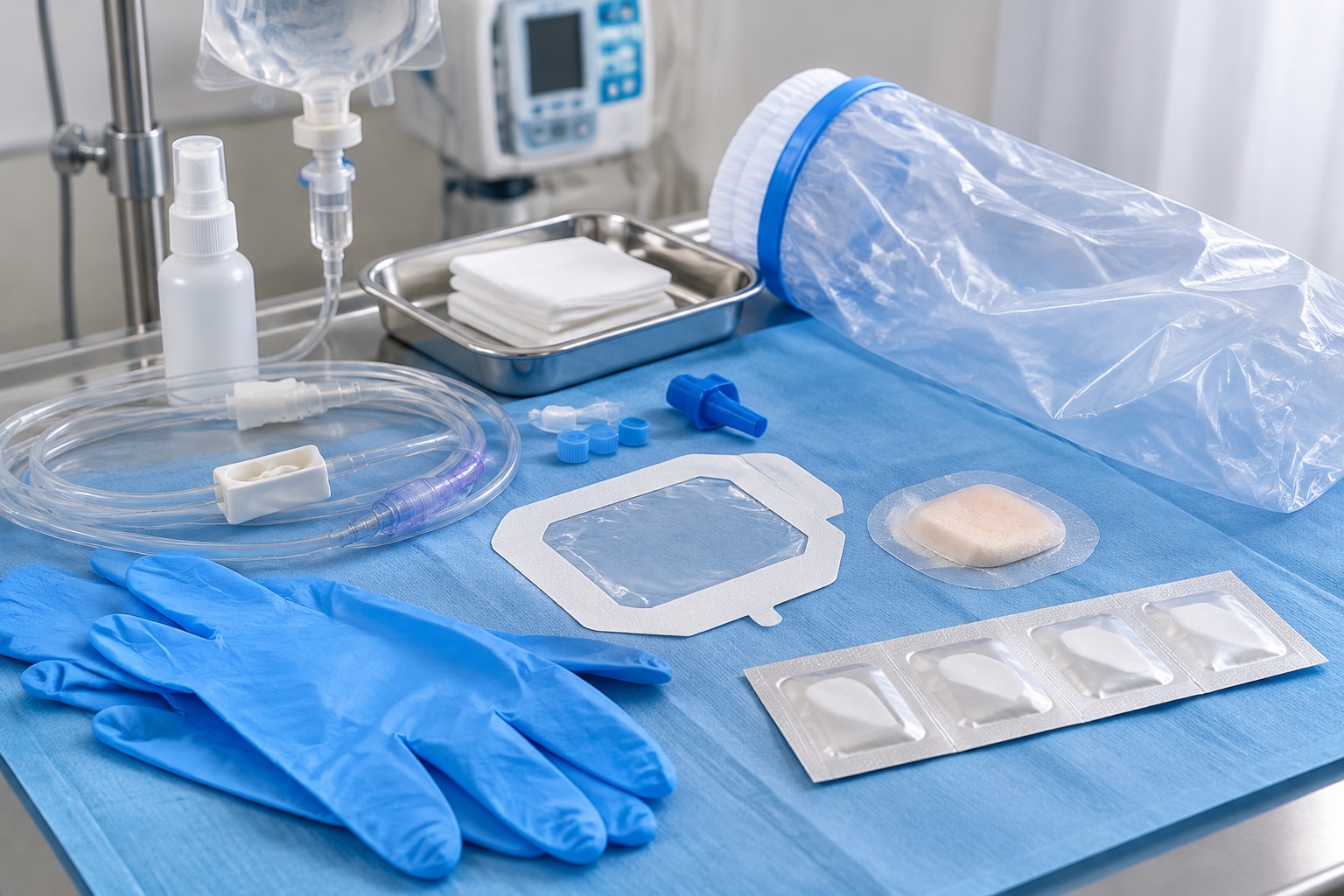
Sterile dressing change technique, chlorhexidine sponge orientation (Biopatch blue-side-up), syringe barrel physics (Laplace law >=10 mL to avoid catheter burst), and waterproof shower protection.
Celsite® Implanted Ports & Huber Needles
B. Braun Celsite® titanium port engineering, non-coring Huber needle deflected bevel mechanics (2,000–3,000 punctures vs coring), tactile bottoming-out confirmation, and sluggish blood return triage.
Caregiver 2 AM Emergency Guide
Tiered decision algorithm for pump alarms, accidental catheter dislodgement, line tears, fever spikes, and sudden shortness of breath with immediate life-saving actions.