
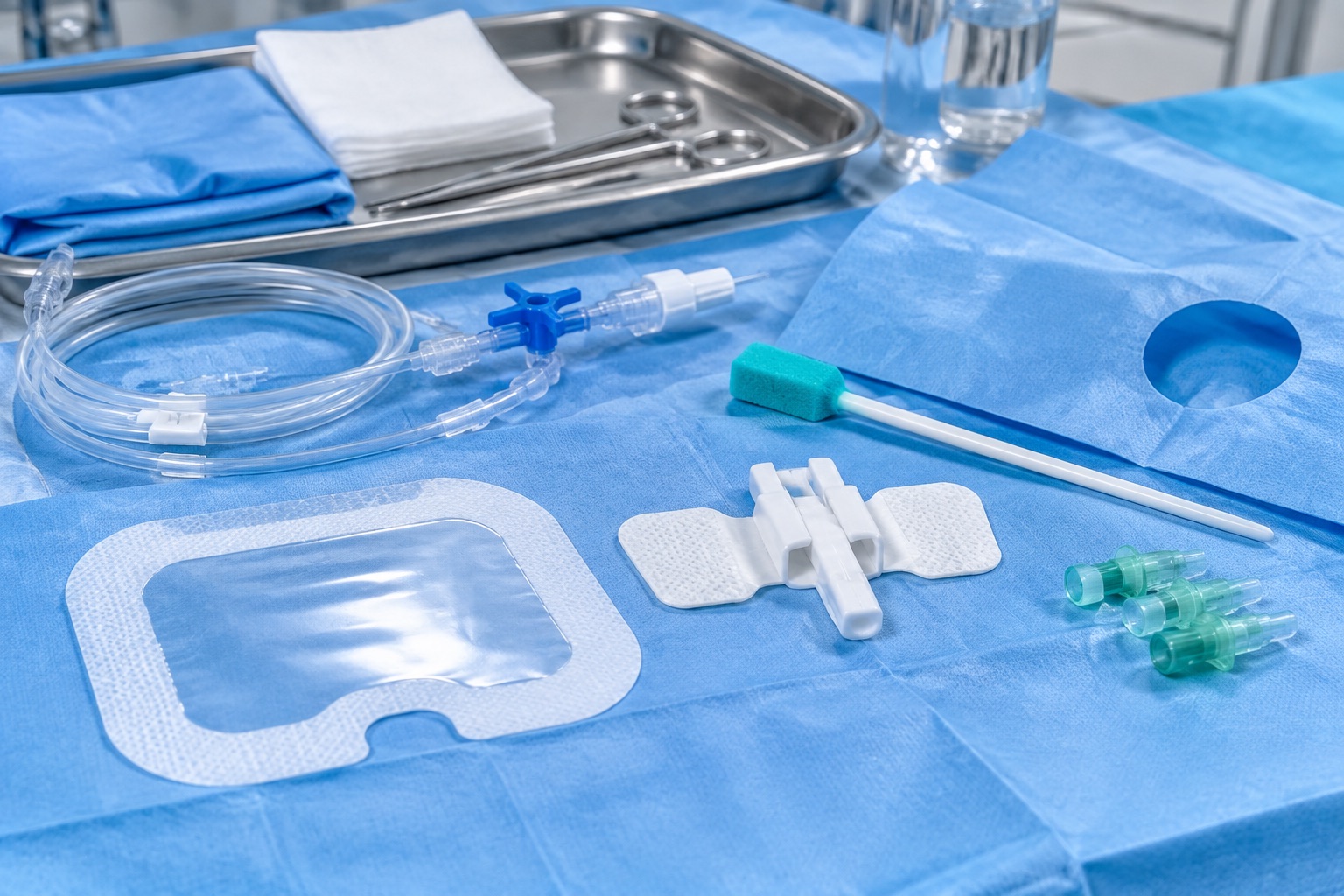
1. Biofilm Pathogenesis & Aseptic Non-Touch Technique (ANTT®)
Central line-associated bloodstream infections carry an attributable mortality of 12% to 25% and an average hospital expenditure exceeding $48,000 per episode. Understanding CLABSI pathogenesis requires distinguishing the chronological shift in microbial contamination vectors:
- Extraluminal Vector (<10 Days Post-Insertion): During early catheter dwell, microorganisms resident on the patient's skin (primarily Staphylococcus epidermidis, Staphylococcus aureus, and Cutibacterium acnes) migrate along the outer subcutaneous catheter tract through capillary action and mechanical pistoning.
- Intraluminal Vector (>10 Days Post-Insertion): In long-term lines, the dominant infection source shifts to intraluminal colonization. Every access of a needleless connector introduces transient microscopic bacterial loads. Within 24 to 48 hours of bacterial adhesion to the polyurethane lumen, sessile organisms synthesize a protective extracellular polymeric substance (EPS) matrix—a mature glycocalyx biofilm. Bacteria within biofilm exhibit up to 1,000-fold resistance to systemic antibiotics and host phagocytosis.
ANTT® Core Operational Rules:
- Key Parts Identification: Key Parts are the critical sterile components that, if contaminated, directly introduce pathogens into the fluid path (needleless connector septums, catheter hubs, male luer collars, and IV tubing spikes). Key Parts must NEVER be touched, even with gloved hands, unless sterile gloves are worn.
- Key Sites Protection: Key Sites are the open skin puncture tracts (the insertion wound). Maintained under strict sterile barrier precautions during dressing changes.
2. The CDC/SHEA Central Line Insertion & Maintenance Bundles
The Pronovost Keystone ICU 5-step bundle transformed modern hospital epidemiology, reducing central line bloodstream infections by over 66% in landmark trials. Full bundle execution is legally and clinically standard across acute hospital care:
| Bundle Component | Clinical Implementation Standard | Evidence Grade |
|---|---|---|
| Anatomical Site Selection | Subclavian vein preference over internal jugular and femoral veins in adult patients. Femoral catheterization is associated with a 3.5-fold higher bacteremia rate and heightened deep vein thrombosis risk; must be replaced within 24–48 hours if placed emergently. | Category I-A (CDC) |
| Maximal Sterile Barriers | Operator wears sterile cap, mask, full-body sterile gown, and sterile gloves. Patient is covered from head to toe in a sterile full-body fenestrated drape. | Category I-A (CDC) |
| Skin Antisepsis | 2% Chlorhexidine Gluconate (CHG) in 70% Isopropyl Alcohol applied with vigorous back-and-forth friction scrub for 30 seconds. Skin must air-dry completely for 2 full minutes before needle puncture. | Category I-A (CDC) |
| Needleless Connector Disinfection | Active friction scrub with 70% IPA for >=15 seconds followed by 15-second dry time, OR continuous passive disinfection port caps containing 70% IPA sponge reservoirs. | Standard 33 (INS) |
| Daily Necessity Evaluation | Daily multidisciplinary catheter rounds evaluating continued indication. Central lines no longer strictly required must be discontinued and removed within 2 hours of order. | Category I-A (CDC) |
3. Needleless Connector Mechanics & Disinfection Physics
Needleless connectors (NCs) are the gateway to the patient's bloodstream. Understanding their internal fluid dynamics prevents intraluminal blood reflux and thrombotic occlusion:
Connector Displacement Physics & Clamping Sequences:
- Negative Displacement Connectors: When a syringe is disconnected from the connector, internal fluid volume shifts, drawing a micro-column of blood back into the catheter tip. Clinicians must CLAMP the catheter BEFORE disconnecting the syringe to prevent blood reflux.
- Positive Displacement Connectors: Expels a micro-droplet of fluid out of the catheter tip upon syringe detachment. Clinicians must DISCONNECT the syringe BEFORE clamping the catheter to allow the positive displacement pulse to clear the lumen.
- Neutral Displacement Connectors: Engineered with internal elastomeric valves that prevent fluid movement during connection and disconnection, eliminating blood reflux regardless of clamping sequence.