
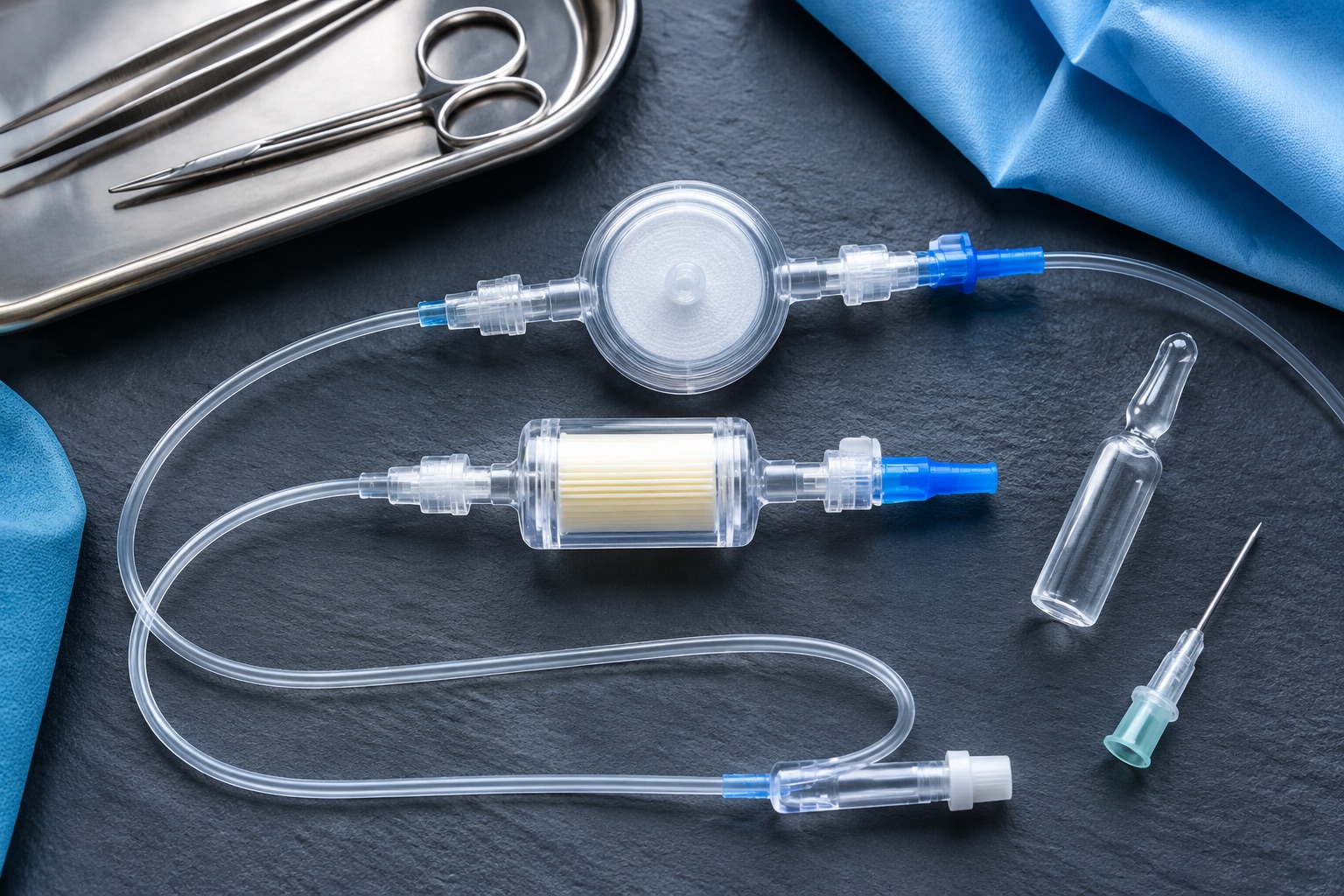
1. Pulmonary Capillary Entrapment & Microvascular Pathology
The human pulmonary capillary network possesses an internal lumen diameter of 7 to 10 μm. When parenteral fluids containing sub-visible particulate matter (such as glass shards from snapped ampoules, rubber stopper cores, cellulose fibers, and mineral crystals) are infused into the venous circulation, they become mechanically impacted within terminal pulmonary arterioles and capillary beds.
Foreign body entrapment triggers platelet aggregation, micro-thrombus formation, and chronic granulomatous inflammation. In critical care and neonatal patients receiving extensive intravenous therapies, particulate accumulation induces acute respiratory distress, right ventricular strain, and secondary pulmonary hypertension.
2. Calcium-Phosphate Precipitation Dynamics in Parenteral Nutrition
In Total Parenteral Nutrition (TPN), calcium and inorganic phosphate exist in a delicate chemical equilibrium. Under physiological compounding conditions, dibasic calcium phosphate (CaHPO4) has very low aqueous solubility compared to monobasic calcium phosphate (Ca(H2PO4)2). As PN solution pH rises (>6.0), amino acid concentration drops, or temperature increases (warmed in neonatal incubators or room air), the equilibrium shifts rapidly toward dibasic precipitation:
This crystalline precipitation can be completely invisible to the naked eye at the compounding table, only crystallizing hours later within the patient's warm intravenous tubing.
3. Membrane Pore Size Selection & Inviolate ASPEN Rules
| Pore Size | Clinical Fluid Compatibility | Primary Retained Entities | Inviolate Clinical Directives |
|---|---|---|---|
| 0.22 μm Filter (Posidyne / PES Membrane) |
2-in-1 aqueous PN (dextrose + amino acids), crystalloids, monoclonal antibodies (infliximab). | Bacteria (Pseudomonas, Staph), fungi (Candida albicans), glass shards, cellulose fibers, subvisible precipitates. | NEVER infuse lipid emulsions through a 0.22 μm filter. Lipid droplets will shear and plug the membrane. |
| 1.2 μm Filter (Lipid-Permeable Membrane) |
3-in-1 Total Nutrient Admixtures (TNA) containing intravenous lipid emulsions (ILE). | Unstable coalesced fat globules (>5 μm), large mineral precipitates, fungal macro-aggregates. | Allows 0.2–0.5 μm lipid micelles to pass unimpeded while trapping hazardous coalesced oil globules. |
When a smart pump triggers an "upstream occlusion" or "filter high pressure" alarm, NEVER bypass or remove the filter from the line. An occluded filter has successfully trapped a potentially lethal bolus of crystalline precipitates or coalesced lipids. Bypassing the filter injects emboli directly into the patient's central circulation. Discard and replace both the infusion container and the entire administration set immediately.