
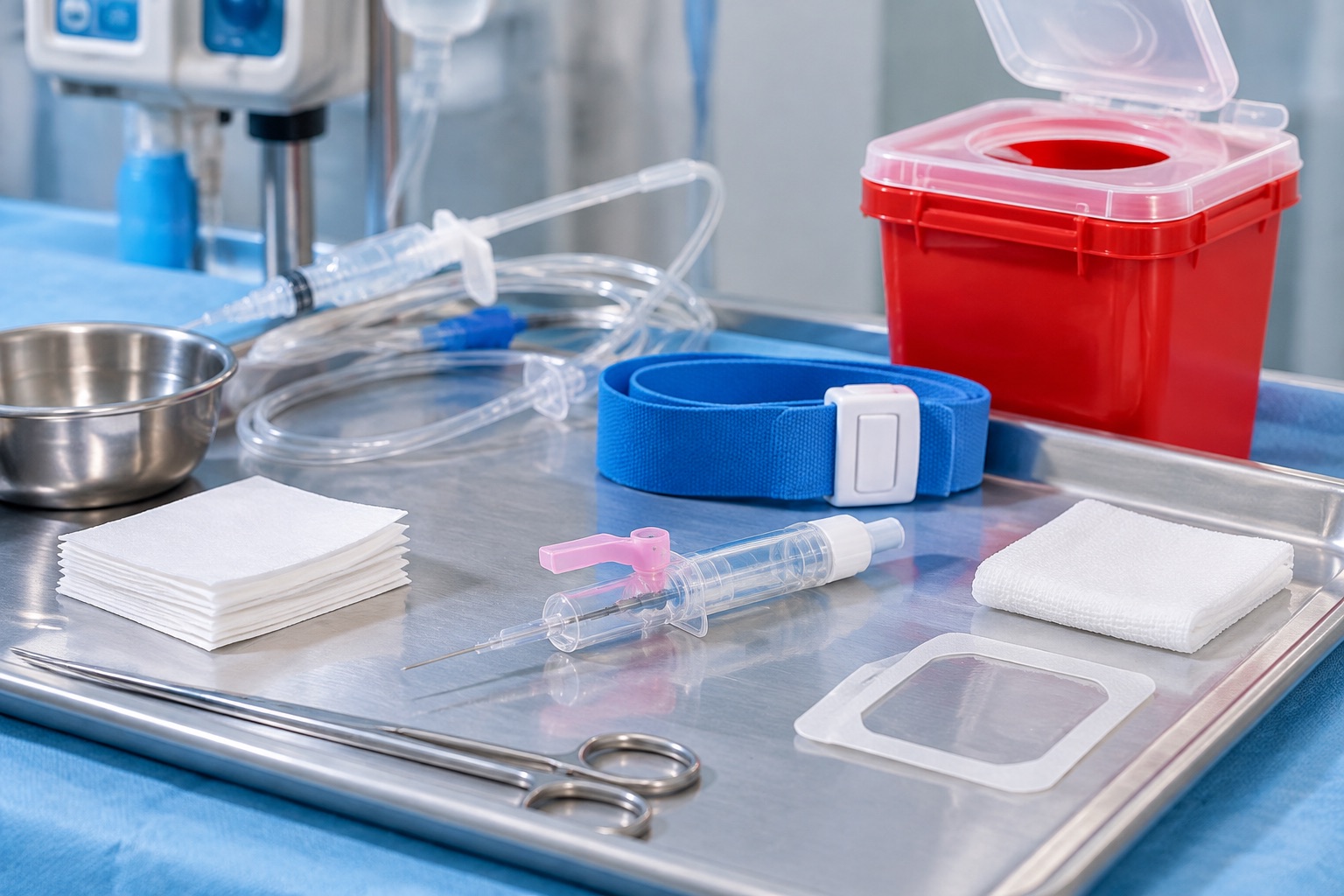
1. Viral Inoculum Dynamics & Hollow-Bore Transmission Odds
Sharps injuries represent the primary occupational transmission vector for bloodborne pathogens among healthcare workers. In vascular access, the geometric distinction between hollow-bore needles (IV catheter stylets, phlebotomy needles) and solid suture needles is critical: hollow-bore blood-filled needles contain up to 50 times the volume of inoculating blood, drastically increasing infection transmission risks:
Percutaneous Transmission Odds Following Hollow-Bore Inoculation:
- Hepatitis B Virus (HBV): 6% to 30% transmission risk in non-immune individuals (up to 30% for HBeAg-positive source patients). Preventable via universal hepatitis B vaccination.
- Hepatitis C Virus (HCV): 1.8% average transmission risk. There is no vaccine or post-exposure prophylaxis; early detection via HCV RNA testing enables curative direct-acting antiviral therapy.
- Human Immunodeficiency Virus (HIV): 0.3% average transmission risk from percutaneous blood exposure. Highly responsive to prompt Post-Exposure Prophylaxis (PEP).
2. Passive vs. Active Safety-Engineered Devices (SEDs)
Under OSHA regulations and EU Directive 2010/32/EU, healthcare facilities must eliminate conventional unprotected needles in favor of Safety-Engineered Devices (SEDs). Modern engineering distinguishes between two primary mechanisms:
Passive Safety vs. Active Shielding Mechanisms:
- Passive Safety-Engineered Devices (e.g., Introcan Safety®): The protective safety shield or spring-loaded clip deploys completely automatically upon withdrawal of the introducer needle stylet from the catheter hub, requiring zero clinician action. Clinical trials consistently demonstrate an 84% to 93% reduction in catheter-related sharps injuries following institution-wide conversion to fully passive safety catheters.
- Active Safety Devices (Hinged Arms, Thumb Sliders): Require the healthcare worker to manually push a lever, flip a hinged shield, or depress a button to cover the needle point. In acute clinical emergencies, code situations, or high-stress environments, user failure rates exceed 25%, leaving contaminated needles exposed.
3. The Emergency 2-Hour Post-Exposure Prophylaxis (PEP) Protocol
Step-by-Step Sharps Injury Emergency Protocol:
- Immediate Puncture Site Hygiene: Wash the wound thoroughly with warm water and soap for at least 15 seconds. DO NOT milk, squeeze, or vigorously scrub the puncture site—squeezing traumatizes microvascular capillary walls and accelerates viral dissemination into deeper tissues. Do not use caustic disinfectants (such as bleach or iodine).
- Immediate Notification & Source Identification: Notify the charge nurse, occupational health, and hospital emergency department immediately. Identify the source patient and verify consent for rapid viral serology (HIV antibody/antigen, Hepatitis B surface antigen, Hepatitis C antibody).
- Initiation of HIV PEP Within 2 Hours: If source patient status is unknown or confirmed HIV-positive, initiate a 28-day 3-drug antiretroviral PEP regimen (e.g., Tenofovir disoproxil fumarate + Emtricitabine + Raltegravir or Dolutegravir) ideally within 2 hours of exposure. PEP efficacy drops significantly when delayed beyond 24 to 72 hours.