
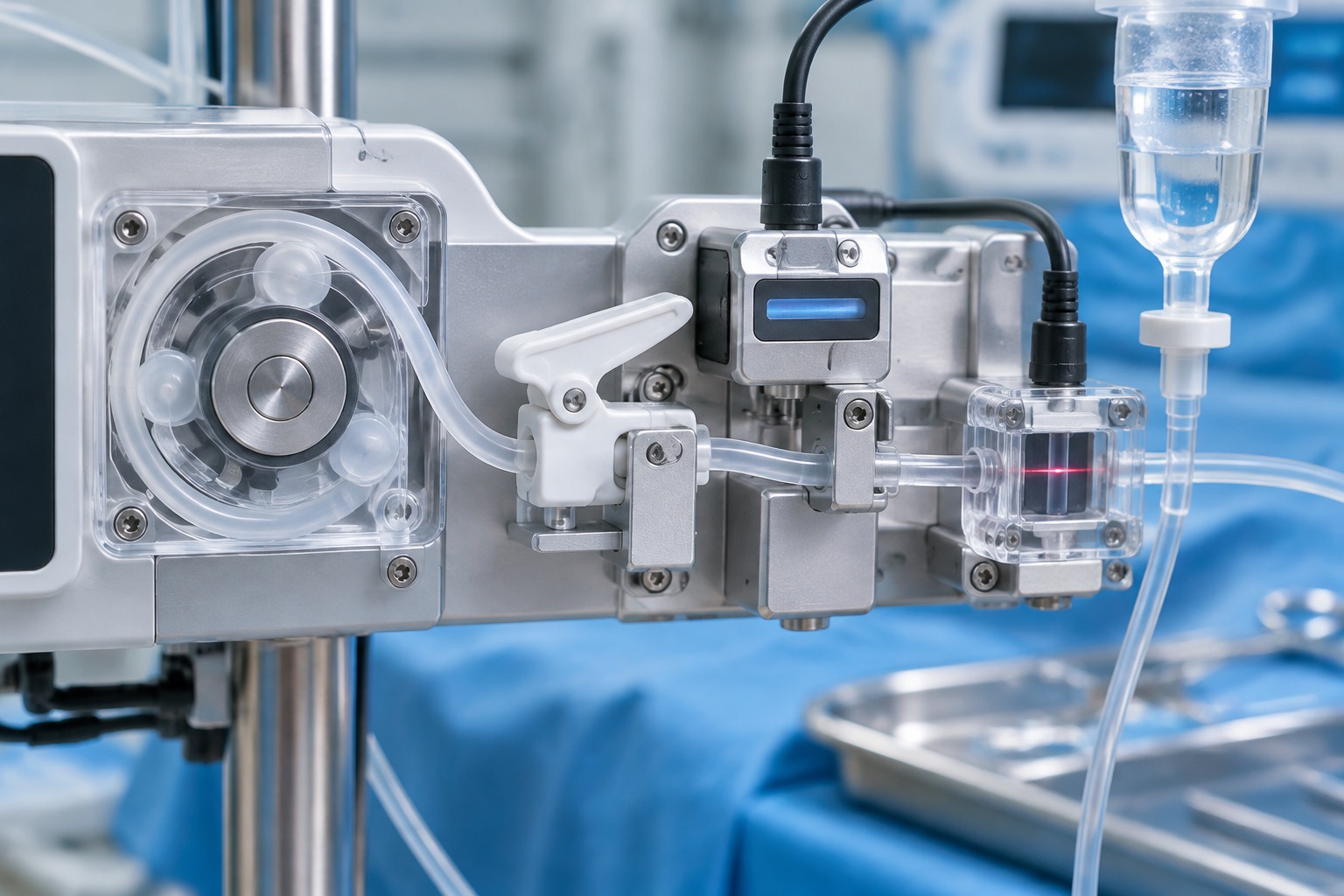
1. Medication Administration Error Epidemiology & Keypad Failure Modes
Epidemiological medication safety studies indicate that 56% of all preventable inpatient medication errors occur at the administration stage, with intravenous programming errors carrying the highest case fatality rate. Traditional gravity infusions and non-smart electronic pumps rely entirely on human calculation and manual keypad entry, where a single typographical error (such as entering 100 mL/h instead of 10 mL/h, or omitting a decimal point) results in a 10-fold or 100-fold overdose of lethal high-alert medications.
2. Dose Error Reduction Systems: Hard vs. Soft Limits
Smart infusion pumps incorporate embedded software containing comprehensive drug libraries with predefined dosing parameters and safety guardrails:
| High-Alert Medication | Clinical Indication | Soft Advisory Limit (Overridable) | Hard Maximum Limit (LOCKED) |
|---|---|---|---|
| Potassium Chloride IV | Severe Hypokalemia | >10 mEq/h (requires clinical note) | >20 mEq/h (Central line only; pump locks) |
| Regular Insulin IV | Diabetic Ketoacidosis | >15 Units/h | >100 Units/h bolus limit |
| Norepinephrine | Septic Shock Resuscitation | >20 μg/min | >50 μg/min (Hard max); <0.5 μg/min (Hard min floor) |
| Heparin Sodium IV | Venous Thromboembolism | >1,800 Units/h | >2,500 Units/h |
| Morphine Sulfate | Continuous Analgesia | >5 mg/h | >15 mg/h |
Interactive Smart Infusion Pump DERS Rate & Dose Error Calculator
Simulate Dose Error Reduction System (DERS) guardrails for high-alert parenteral medications. Select a high-alert drug, enter patient weight and ordered dose rate to calculate volumetric pump speed (mL/h) and evaluate soft/hard guardrails:
3. Wireless CQI Telemetry & Combatting Alarm Fatigue
When soft limit override rates exceed 85% to 90%, the alert provides zero clinical protection and desensitizes nurses, leading to ignored true warnings. Multi-disciplinary Continuous Quality Improvement (CQI) committees (comprising infusion nurses, clinical pharmacists, and biomedical engineers) must review monthly wireless pump telemetry logs. Profiles must be tailored for specific care areas (Adult ICU, Neonatal ICU, Med-Surg, Oncology) to calibrate soft limits to real-world clinical practice while keeping hard limits securely locked.
Bedside Physical Line Tracing Directives:
Smart pump software cannot detect downstream physical errors (such as loading the wrong tubing channel or leaving a secondary piggyback clamp closed). Nurses must physically trace the infusion tubing with their fingers from the medication container, through the dedicated pump channel, to the specific vascular access port before pressing start.